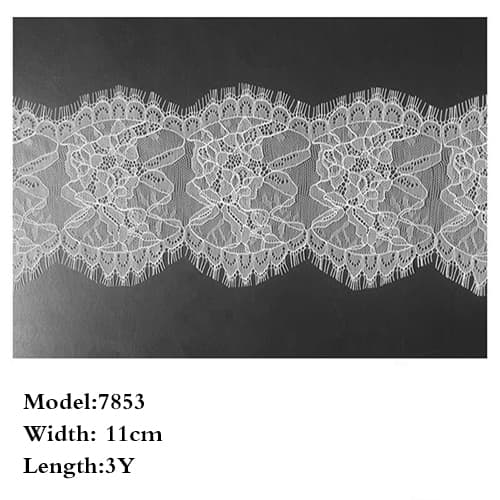
Eyelash Lace can shrink or deform during fabric processing because of heat exposure, excessive mechanical tension, washing conditions, drying methods, and improper finishing control. These factors can change the dimensions of the knitted structure, affect yarn relaxation, and alter the position of the decorative fringes.
Different fiber compositions respond differently to processing conditions. Nylon Eyelash Lace, Polyester Eyelash Lace, and elastic lace constructions may show different levels of shrinkage and deformation when exposed to heat, moisture, and mechanical stress. Understanding these differences helps manufacturers maintain consistent fabric width, fringe appearance, and pattern dimensions throughout production.
Shrinkage occurs when the fabric becomes smaller after processing because of fiber relaxation, changes in yarn tension, thermal effects, or moisture-related dimensional changes.
Knitted lace structures contain interconnected yarn loops that can retain internal tension after manufacturing. During washing, dyeing, or drying, these loops may relax and rearrange themselves. As a result, the fabric can become narrower or shorter than its original dimensions.
For example, a lace roll with an initial width of 150 cm may measure 145.5 cm after finishing. The width shrinkage is calculated as:
Width shrinkage = (150 - 145.5) / 150 × 100% = 3%
This 3% reduction may affect cutting layouts and garment pattern dimensions. Whether it is acceptable depends on the product specification and the intended application.
Heat can cause fibers and yarns to relax, shrink, or change their physical properties. The effect depends on fiber type, previous heat-setting conditions, temperature, exposure time, and the tension applied during processing.
Polyester is commonly heat-set to improve dimensional stability. However, an unsuitable heat-setting temperature or excessive processing tension can create dimensional changes after the fabric is released from the finishing equipment.
Nylon also responds to thermal conditions, although its processing behavior differs from polyester. Excessive heat may affect its dimensional stability and, depending on the construction, change the appearance of the decorative fringes.
For example, if a Polyester Eyelash Lace sample is processed at a temperature outside its established finishing window, the ground structure may relax differently from the decorative yarns. This can result in changes to the fabric width or fringe orientation.
Yes. Mechanical tension during dyeing, washing, stenter finishing, and fabric winding can stretch or distort the knitted structure.
If the lace is pulled too tightly along its width, its original loop arrangement may become distorted. Once the tension is released, the material may contract unevenly. Excessive lengthwise tension can also influence fabric width and pattern proportions.
This is particularly important for Wide Eyelash Lace, where uneven tension across the fabric width may create visible differences between the left and right edges.
For example, if a Lace fabric is stretched from 150 cm to 155 cm during finishing, its width temporarily increases by approximately 3.33%. If the fabric later relaxes unevenly, the finished width may not return consistently to its original dimensions.
Washing and drying can influence both the fiber properties and the internal structure of knitted lace. Water, temperature, agitation, and drying tension all contribute to dimensional changes.
During washing, moisture can help release internal stresses created during knitting and previous finishing operations. Strong mechanical agitation may also disturb delicate loops and decorative yarns.
During drying, excessive heat or uneven tension can create additional dimensional changes. If the fabric is dried under uncontrolled stretching conditions, the finished dimensions may differ from those measured before washing.
For example, a garment manufacturer may receive an Eyelash Lace Trim that measures 20 mm in width before washing but only 19 mm after a sample wash test. This represents a 5% width reduction. If the trim is used along a narrow garment opening, the difference may affect the final sewing position and visual proportions.
Fiber composition is one of the main reasons why different lace products show different dimensional behavior.
Nylon is commonly selected for its softness, flexibility, and suitability for delicate lace applications. However, moisture absorption and thermal processing can influence its dimensional behavior.
Changes in humidity, washing conditions, and finishing tension may affect how nylon yarns relax. Manufacturers should therefore establish suitable washing and drying conditions for each construction instead of assuming that every Nylon lace product will respond identically.
Polyester generally offers good dimensional stability, but it is not completely resistant to shrinkage or deformation. Heat exposure, previous yarn processing, and finishing tension can still influence the final dimensions.
For example, two polyester lace products with different yarn specifications and knitting densities may respond differently to the same heat-setting conditions. The more open construction may also show more noticeable changes in pattern geometry when subjected to uneven mechanical tension.
Stretch Eyelash Lace often contains elastane or other elastic yarns to provide extension and recovery. These materials require additional attention during heat setting, drying, and washing.
If elastic yarns are exposed to unsuitable temperatures or excessive processing tension, their recovery performance may deteriorate. The lace may become permanently stretched, lose elasticity, or develop uneven dimensions.
Manufacturers should test both dimensional stability and stretch recovery because a fabric can maintain its original width while still losing part of its elastic performance.
Yes. The arrangement of yarn loops and the density of the knitted structure influence how the fabric responds to tension and relaxation.
Open lace constructions generally contain more visible spaces between the knitted elements. These structures may show noticeable changes in pattern geometry when exposed to uneven stretching or finishing tension.
More compact constructions may provide additional structural support, but their dimensional stability still depends on yarn properties and processing conditions.
For Scalloped Eyelash Lace, deformation may be especially visible along the curved decorative edges. If the fabric width changes unevenly, the scallop spacing and fringe alignment may no longer match the approved sample.
During sample development, manufacturers should compare the lace before and after finishing to determine whether the knitting construction requires adjustment or whether the problem originates from downstream processing.
Effective shrinkage control requires consistent processing conditions from knitting to final finishing. Manufacturers should establish a suitable process for each fiber composition and lace construction.
Control machine tension: Avoid excessive stretching during knitting, dyeing, and finishing.
Set suitable heat conditions: Select temperature and exposure time according to fiber composition and yarn specifications.
Optimize washing conditions: Use suitable water temperature and mechanical agitation for delicate lace structures.
Control drying tension: Avoid excessive widthwise or lengthwise stretching during drying.
Allow fabric relaxation: Use a consistent relaxation period before final dimensional inspection.
Record processing parameters: Maintain production records to improve repeatability between batches.
Perform dimensional testing: Compare fabric width and length before and after the agreed washing or finishing procedure.
For example, a manufacturer producing 1,000 meters of Eyelash Lace Material can take samples from the beginning, middle, and end of the production roll. Each sample can be measured before and after finishing to identify whether shrinkage is consistent throughout the batch.
Several tests can help manufacturers and buyers evaluate dimensional stability and identify potential processing problems.
Fabric width and length should be measured before and after a specified washing or finishing procedure. The percentage change can then be calculated to determine the degree of shrinkage or expansion.
For textile products, ISO 5077 provides a method for determining dimensional change in washing and drying. ISO 6330 specifies domestic washing and drying procedures for textile testing. The selected test conditions should match the product requirements and the buyer's agreed testing method.
For elastic lace, testing should measure how much the fabric extends under a defined force and how well it returns to its original dimensions after the force is released.
This is particularly important for lingerie and fitted apparel, where dimensional stability alone cannot fully represent wearing performance.
Visual inspection should cover fringe alignment, edge shape, pattern spacing, and surface distortion. Manufacturers should pay particular attention to Eyelash Lace Edging because uneven edge deformation can become visible after sewing.
For example, a sample may show acceptable overall width shrinkage but still have one edge that curls or develops irregular fringes. This indicates that dimensional measurements should be combined with visual quality checks.
Buyers should evaluate the finished fabric under conditions that are reasonably close to its intended use. Approving an unfinished sample without considering dyeing, washing, and drying effects may lead to differences between the approved sample and bulk production.
Important points to confirm include:
Fiber composition and yarn specifications.
Finished fabric width and weight.
Acceptable lengthwise and widthwise dimensional change.
Fringe length and decorative edge consistency.
Stretch and recovery performance where applicable.
Colorfastness and appearance after washing.
Packaging and storage conditions to protect the finished material.
For Eyelash Lace Embellishment used in garments, the buyer should also consider how the lace behaves after cutting, sewing, and washing as part of the finished garment.
Eyelash Lace may shrink or deform during fabric processing because of heat exposure, mechanical tension, washing, drying, and the natural relaxation of knitted structures. Fiber composition and knitting construction also influence how the material responds to these conditions.
Manufacturers can improve dimensional stability by controlling processing tension, selecting suitable thermal conditions, standardizing washing and drying procedures, and performing dimensional tests before bulk approval.
For overseas garment brands, lingerie manufacturers, and wholesale fabric buyers, evaluating the finished lace after relevant processing is more reliable than checking its appearance in an unfinished state. This helps ensure that Eyelash Lace Fabric maintains its intended dimensions, decorative fringe structure, and appearance throughout garment production.

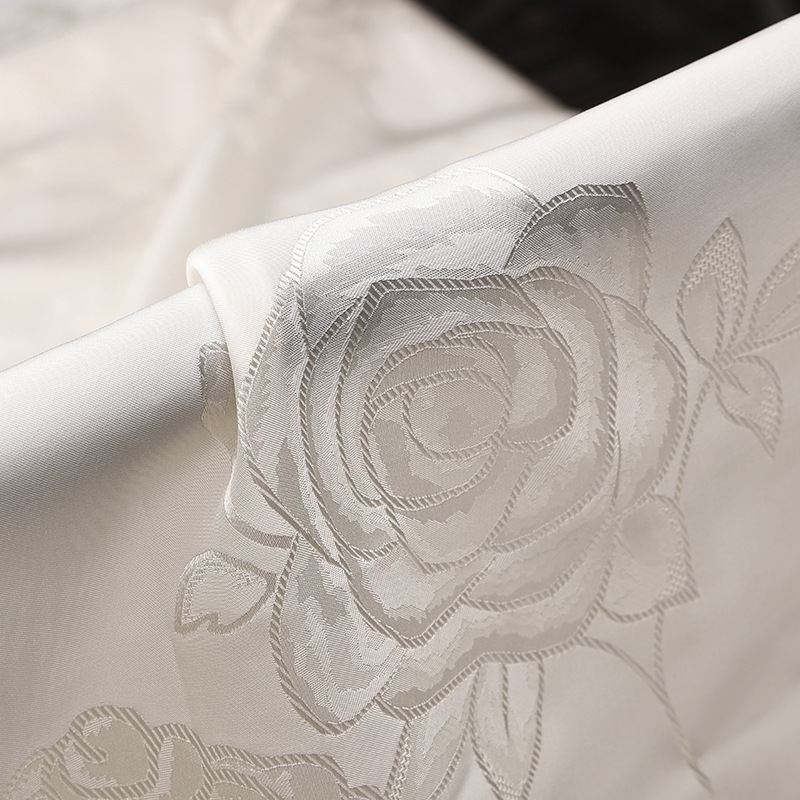
This fabric combines the smoothness and natural sheen of Mulberry Silk with the durability and versatility of Viscose, providing comfort and beauty for a variety of fashion applications.
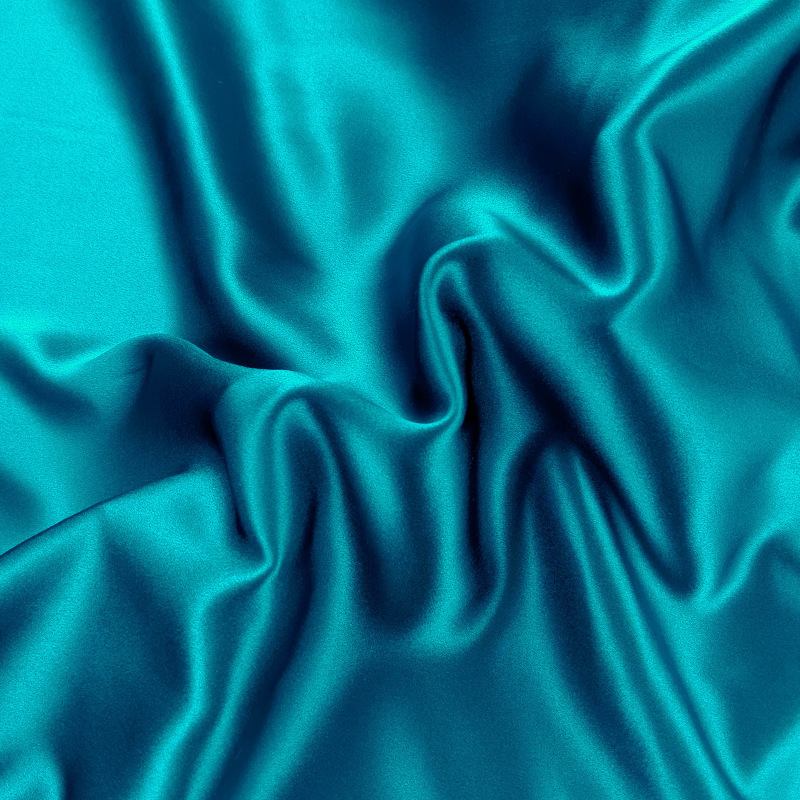
Used for all kinds of high-end silk bedding, such as silk four-piece sets, pillowcases, sheets, quilt covers, as well as silk scarves, summer pajamas, ladies' fashions and formal dresses, etc.
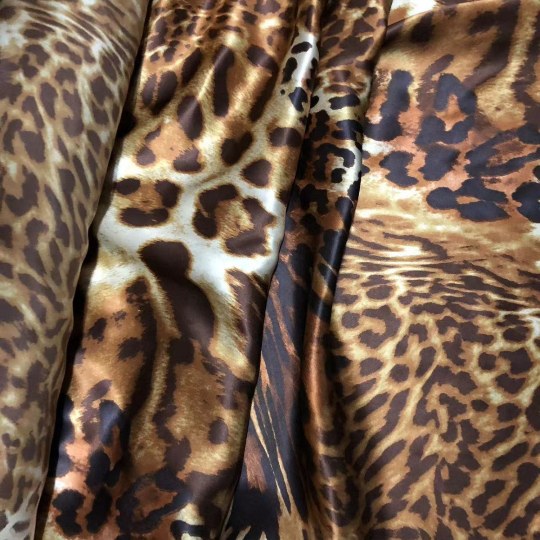
Leopard Jacquard Fabric is a luxurious and versatile textile characterized by its intricate woven patterns and elegant design.
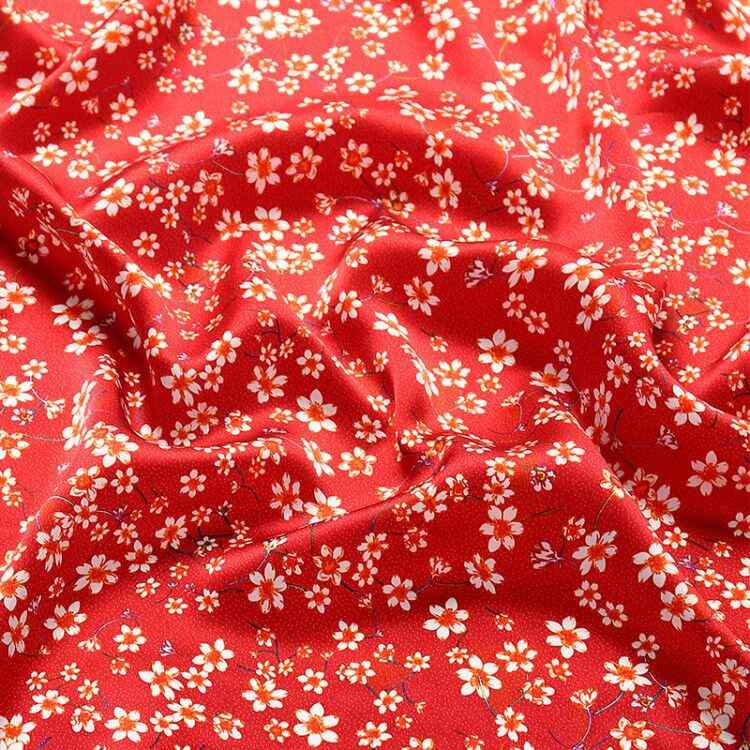
Floral Silk Fabric, crafted from Mulberry silk with a width of 140CM, a thickness of 16mm, and a weight of 68gsm, is ideal for creating elegant dresses, summer and spring outfits, luxurious sleepwear, and refined accessories like scarves and ties.
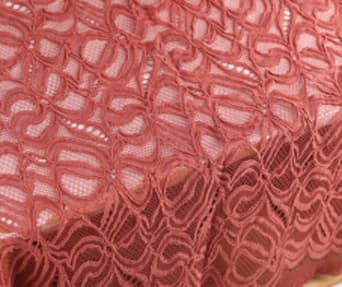
The best way to care for and wash Lace Fabric is to clean it gently using cold or lukewarm water and a mild detergent. Hand washing is recommended for delicate lace, while machine washing should only be done on a gentle cycle with the fabric placed inside
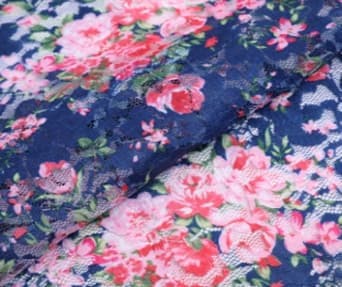
Lace Fabric can be made from a variety of materials, including cotton, polyester, nylon, rayon, silk, and spandex. Each material offers different characteristics such as softnes
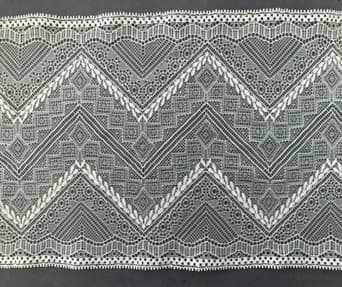
Corded lace is one of the most elegant and structurally rich types of lace used in fashion and textile design. It is widely applied in bridal gowns, evening dresses, lingerie, and decorative fabrics due to its raised outlines and three-dimensional texture. Unlike flat lace, corded lace is created by adding extra yarns or cords to emphasize floral or geometric patterns, making it more luxurious and visually striking.
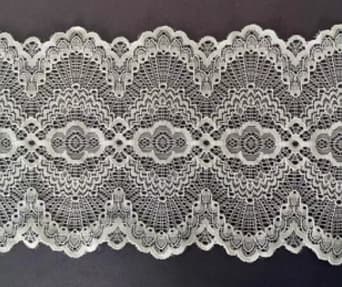
Corded lace is suitable for wedding dresses, evening gowns, blouses, skirts, lingerie, jackets, children's wear, and fashion accessories. Its raised embroidered patterns create a textured and elegant look that enhances both luxury and casual garments. Whether used as white lace or black corded lace fabric, it remains a versatile material widely used in modern fashion design.
Whatsapp: +86-137-1297-3009
Contact: Sophie Liao
Mailbox: sophie@chuanchencrafts.com
Add:Room 304, No.11, Jiaoyu Road, ZhangCun, Dongcheng Street, Dongguan City- 523112, China.

Wechat customer service
Copyright © 2026 Dongguan Chuanchen Craft Products Co., Ltd All rights reserved.