Yes, Black Eyelash Lace can stretch during garment production, even when the fabric is not specifically designed as an elastic material. Stretching may occur because of the knitted construction, yarn properties, fabric tension during spreading and cutting, sewing pressure, or mechanical handling. The amount of stretch depends on the fiber composition, knitting structure, fabric density, and whether elastic yarns are incorporated into the material.
For garment manufacturers, controlling fabric stretch is important because excessive extension can change the original dimensions of the lace, distort decorative fringes, and cause uneven seams. This is particularly relevant when using Black Eyelash Lace for lingerie, dresses, sleeves, garment inserts, and decorative edging.
Understanding how the material behaves during each production stage helps manufacturers maintain consistent garment dimensions and avoid unnecessary fabric waste.
Most Eyelash Lace fabric is produced using knitted structures that contain interconnected yarn loops. These loops can move and change shape when tension is applied, allowing the fabric to extend even without elastane.
During garment production, the lace may be pulled while spreading fabric, positioning patterns, cutting panels, or feeding the material through a sewing machine. If the applied tension is not controlled, the fabric may become temporarily stretched or retain some permanent deformation.
For example, a 20 cm wide lace sample may extend to 21 cm when pulled during handling. This represents a 5% increase in width. If the fabric is cut while stretched, the finished garment component may become smaller than expected after the material relaxes.
The knitting structure determines how much movement is available between yarn loops. A more open construction may allow greater deformation, while a compact structure may provide more resistance to extension.
However, structural density alone does not determine stretch performance. Yarn flexibility, loop length, stitch arrangement, and finishing conditions also affect the final result.
For example, two black lace fabrics made with the same fiber composition may behave differently if one has a more open knitted structure. The more open sample may extend more easily under the same pulling force, while the denser sample may maintain its dimensions more consistently.
This is why manufacturers should test the actual lace construction rather than assuming that all Black Eyelash Lace products have the same stretch characteristics.
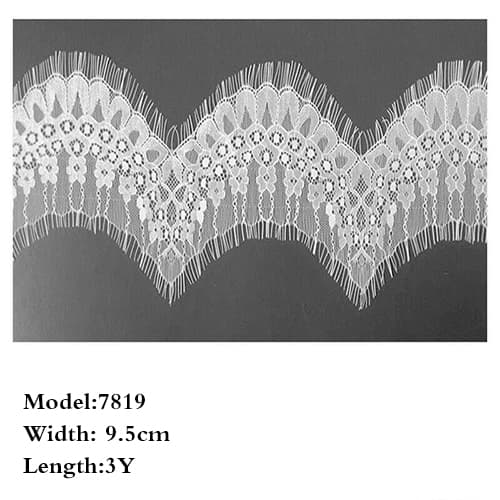
Yes. Stretch Eyelash Lace is designed to provide greater extension and recovery, usually through the incorporation of elastane or other elastic yarns.
This makes it suitable for fitted garments, lingerie, and applications where the lace needs to follow body movement. However, elastic materials still require careful handling during cutting and sewing.
If the material is stretched excessively during production, it may not return completely to its original dimensions. The resulting garment may have uneven edges, distorted decorative patterns, or inconsistent fitting.
For example, a Stretch Lace sample measuring 10 cm may extend to 13 cm under a specified test condition. Its extension is 30%. After the load is removed, the manufacturer should measure the remaining deformation to determine whether the material has recovered properly.
Yes. Fabric spreading and cutting are common stages where unwanted stretching can occur, particularly with lightweight or open-knit lace constructions.
When fabric rolls are pulled tightly across a cutting table, the material may extend along its length or width. If patterns are placed and cut before the fabric has relaxed, the finished pieces may not match the intended measurements after tension is released.
This problem can be more noticeable in Wide Eyelash Lace because a wider fabric panel may experience uneven tension across different areas.
For example, a manufacturer preparing a 50 cm long garment panel may find that the lace measures 51 cm immediately after spreading because of handling tension. If the fabric is cut at this stage, it may contract after relaxation and create a dimensional mismatch during sewing.
To reduce this risk, manufacturers should allow the material to relax according to its construction and establish consistent spreading tension before cutting.
Sewing can introduce additional tension through the feed mechanism, presser foot pressure, thread tension, and operator handling. These factors may cause the lace to stretch unevenly as it passes through the machine.
Lightweight Eyelash Lace Material is particularly sensitive to excessive handling because its open structure and decorative fringes can move during stitching.
Several sewing conditions should be checked:
Presser foot pressure: Excessive pressure may compress or drag the lace during feeding.
Feed mechanism: Uneven feeding between fabric layers can cause one layer to stretch more than the other.
Thread tension: Incorrect tension may create puckering or pull the lace edge out of shape.
Sewing speed: High-speed sewing may make it more difficult to control delicate lace accurately.
Operator handling: Pulling the material from the front or back of the machine can introduce unwanted extension.
For example, when attaching Eyelash Lace Trim to a lightweight garment panel, the lace and base fabric should feed at a consistent rate. If the lace is pulled while the base fabric moves normally, the finished seam may develop waves or an uneven edge.
The difference depends on yarn construction, knitting structure, and finishing conditions. Fiber type alone is not enough to determine which material will stretch more.
Nylon Eyelash Lace is commonly selected for its flexibility, soft hand feel, and suitability for delicate apparel. Depending on its yarn and knitted construction, it may extend relatively easily during handling.
However, different nylon yarns can have different elongation and recovery properties. A compact Nylon lace construction may be more dimensionally stable than an open construction made from another yarn specification.
Polyester Eyelash Lace is often selected for its durability and dimensional stability. However, polyester lace can still stretch during cutting and sewing because knitted loops can deform under mechanical tension.
For example, two lace samples made from nylon and polyester may both extend by 4% under a particular test load. Their recovery after releasing the load may still be different. Therefore, manufacturers should compare measured extension and residual deformation instead of making decisions based only on fiber names.
Temporary stretch occurs when the lace extends under an applied force and returns close to its original dimensions after the force is removed. Permanent fabric growth occurs when some of the deformation remains after the material is released and allowed to recover.
This distinction is important during garment manufacturing because a fabric that stretches temporarily may still be suitable for production if it recovers properly. However, excessive permanent growth can affect finished garment dimensions and wearing performance.
For example, a 10 cm sample that extends to 11 cm under a defined load has experienced 10% extension. If it returns to 10.1 cm after recovery, it has retained 1% residual extension relative to its original length. If it remains at 10.5 cm, the residual extension is 5%, indicating substantially greater fabric growth.
These figures are illustrative test examples. Actual acceptance limits should be established according to the fabric specification and garment application.
Stretch control should begin before cutting and continue through sewing and finishing. Manufacturers should understand the material's extension and recovery characteristics before selecting production settings.
Practical control measures include:
Relax the fabric: Allow the lace to recover from roll tension before spreading and cutting.
Control spreading tension: Avoid pulling the material tightly across the cutting table.
Use suitable cutting methods: Keep the fabric flat and prevent unnecessary movement during cutting.
Adjust sewing pressure: Set the presser foot and feed mechanism according to the lace construction.
Maintain consistent feeding: Avoid pulling the material manually while sewing.
Check finished dimensions: Compare garment components before and after sewing.
Standardize production settings: Record suitable machine settings for repeat orders.
For example, a factory producing 500 lingerie garments can inspect lace components at the beginning, middle, and end of the sewing run. Comparing panel widths and seam appearance helps identify whether stretching develops during machine operation or originates from fabric preparation.
Buyers should evaluate both fabric extension and recovery rather than checking only whether the lace can be stretched by hand.
ASTM D2594/D2594M provides a test method for stretch properties of knitted fabrics having low power. It addresses fabric stretch and growth, which are relevant when selecting knitted materials for apparel applications.
For lace products with more pronounced elastic performance, the testing method should also be appropriate for the fabric construction and intended use.
A practical sample evaluation can include:
Measure the original fabric length and width.
Apply a defined extension force or test condition.
Record the extended dimensions.
Release the load and allow the sample to recover for a specified period.
Measure the remaining deformation.
Repeat the test in the lengthwise and widthwise directions where applicable.
For example, a buyer comparing two Black Eyelash Lace samples may find that both extend by 20% under the same test condition, but Sample A returns closer to its original dimensions. Sample A may therefore be more suitable for fitted garment applications that require repeated extension and recovery.
Yes. Excessive stretching can change the spacing, alignment, and overall appearance of decorative fringes. It may also distort the original edge shape, particularly when the lace contains scalloped patterns.
For Scalloped Eyelash Lace, stretching may cause the scallops to become wider or less uniform. After the tension is released, the edge may contract unevenly, creating inconsistent spacing between decorative sections.
For Eyelash Lace Edging and Eyelash Lace Embellishment, these changes can become visible after the lace is attached to the garment. Manufacturers should therefore inspect the finished edge rather than relying only on the original fabric measurements.
When sourcing Black Eyelash Lace Textile for commercial garment manufacturing, buyers should provide more than a color and width requirement. Stretch performance and dimensional stability should also be included in the product specification.
Important details to confirm include:
Fiber composition and elastic yarn content.
Knitting structure and fabric weight.
Stretch percentage in the lengthwise and widthwise directions.
Recovery performance after extension.
Finished width and fringe dimensions.
Dimensional stability after washing or finishing.
Suitability for the intended cutting and sewing process.
For OEM and ODM garment projects, requesting a sample for actual cutting and sewing trials is particularly useful. A fabric may look suitable when inspected as a loose sample but behave differently when processed with the factory's production equipment.
Black Eyelash Lace can stretch during garment production because of its knitted construction, yarn properties, elastic components, and mechanical tension during cutting and sewing. Even non-elastic lace can extend temporarily when pulled, while excessive tension may cause permanent deformation.
Manufacturers can reduce these problems by controlling fabric relaxation, spreading tension, cutting methods, sewing pressure, and feeding conditions. Testing both extension and recovery provides a more reliable understanding of how the lace will perform during production.
For lingerie manufacturers, fashion brands, and wholesale buyers, selecting suitable Black Eyelash Lace requires evaluating not only its appearance but also its dimensional stability and handling performance. Whether sourcing Nylon Eyelash Lace, Polyester Eyelash Lace, or Stretch Eyelash Lace, testing the material under realistic garment production conditions helps improve finished product consistency and reduce manufacturing defects.
```
Previous:
Next: How Does Fabric Weight Affect The Drape Of Black Eyelash Lace?

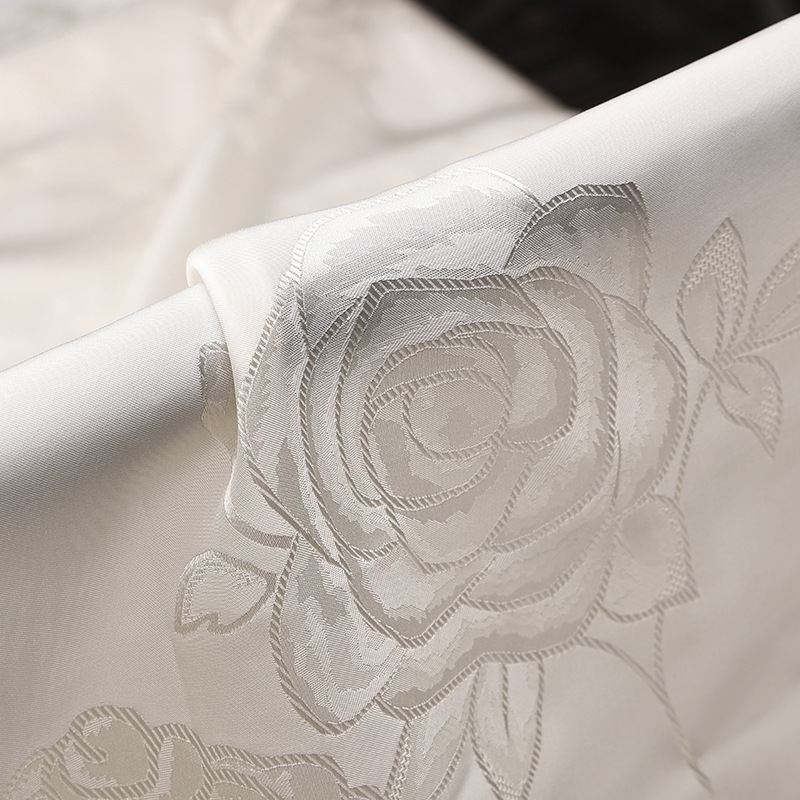
This fabric combines the smoothness and natural sheen of Mulberry Silk with the durability and versatility of Viscose, providing comfort and beauty for a variety of fashion applications.
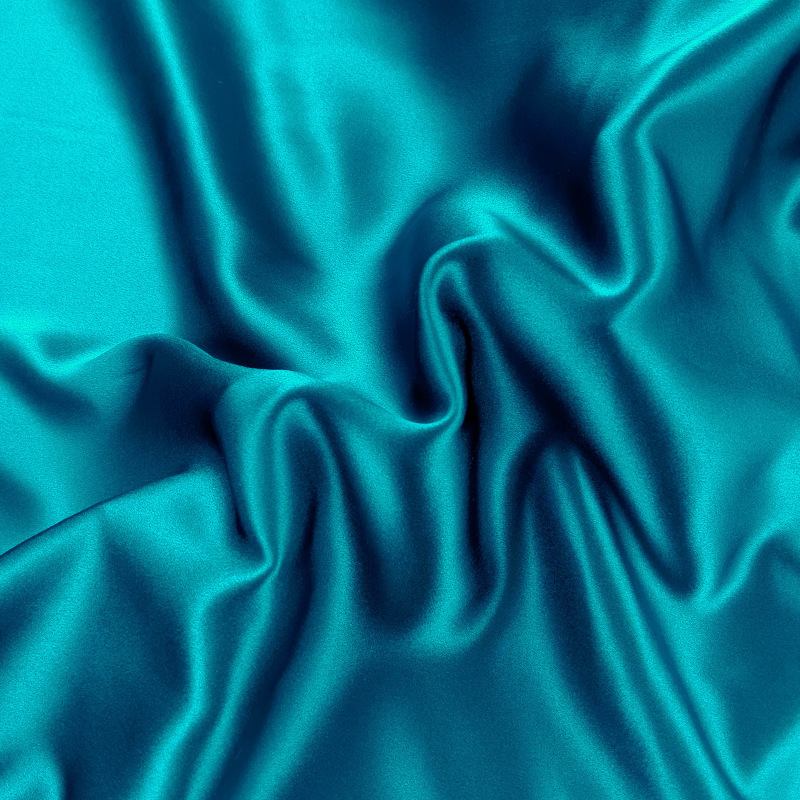
Used for all kinds of high-end silk bedding, such as silk four-piece sets, pillowcases, sheets, quilt covers, as well as silk scarves, summer pajamas, ladies' fashions and formal dresses, etc.
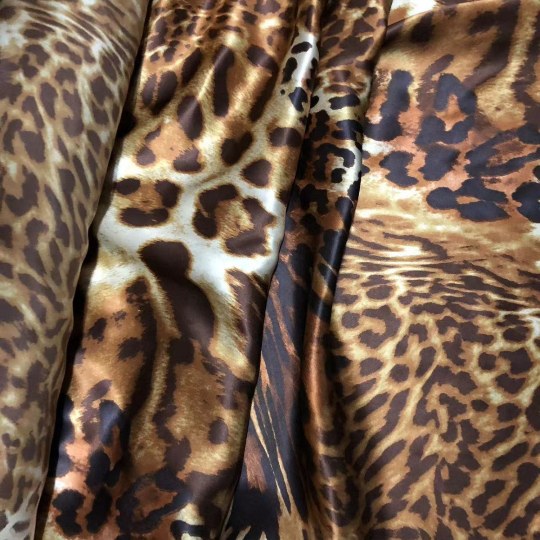
Leopard Jacquard Fabric is a luxurious and versatile textile characterized by its intricate woven patterns and elegant design.
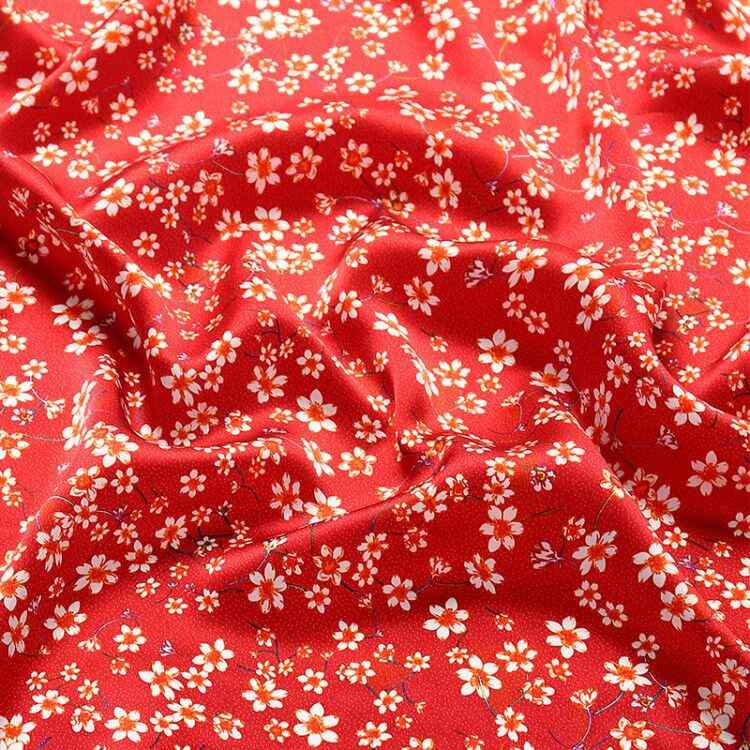
Floral Silk Fabric, crafted from Mulberry silk with a width of 140CM, a thickness of 16mm, and a weight of 68gsm, is ideal for creating elegant dresses, summer and spring outfits, luxurious sleepwear, and refined accessories like scarves and ties.
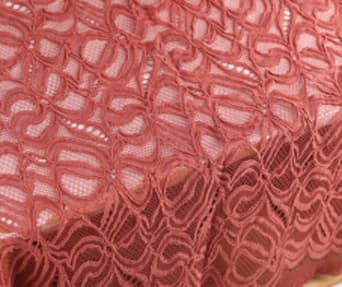
The best way to care for and wash Lace Fabric is to clean it gently using cold or lukewarm water and a mild detergent. Hand washing is recommended for delicate lace, while machine washing should only be done on a gentle cycle with the fabric placed inside
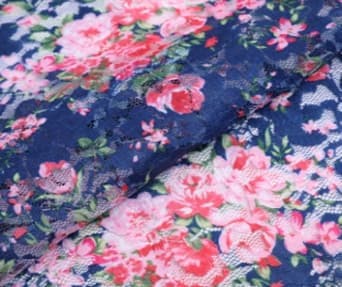
Lace Fabric can be made from a variety of materials, including cotton, polyester, nylon, rayon, silk, and spandex. Each material offers different characteristics such as softnes
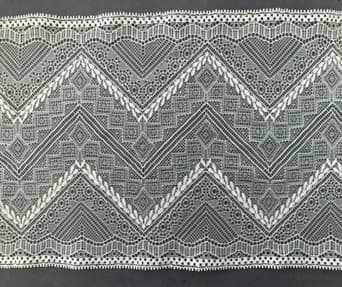
Corded lace is one of the most elegant and structurally rich types of lace used in fashion and textile design. It is widely applied in bridal gowns, evening dresses, lingerie, and decorative fabrics due to its raised outlines and three-dimensional texture. Unlike flat lace, corded lace is created by adding extra yarns or cords to emphasize floral or geometric patterns, making it more luxurious and visually striking.
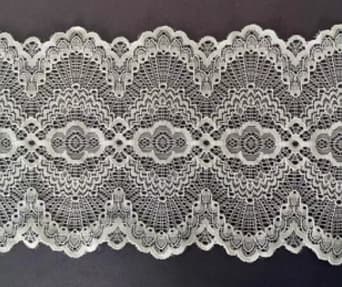
Corded lace is suitable for wedding dresses, evening gowns, blouses, skirts, lingerie, jackets, children's wear, and fashion accessories. Its raised embroidered patterns create a textured and elegant look that enhances both luxury and casual garments. Whether used as white lace or black corded lace fabric, it remains a versatile material widely used in modern fashion design.
Whatsapp: +86-137-1297-3009
Contact: Sophie Liao
Mailbox: sophie@chuanchencrafts.com
Add:Room 304, No.11, Jiaoyu Road, ZhangCun, Dongcheng Street, Dongguan City- 523112, China.

Wechat customer service
Copyright © 2026 Dongguan Chuanchen Craft Products Co., Ltd All rights reserved.